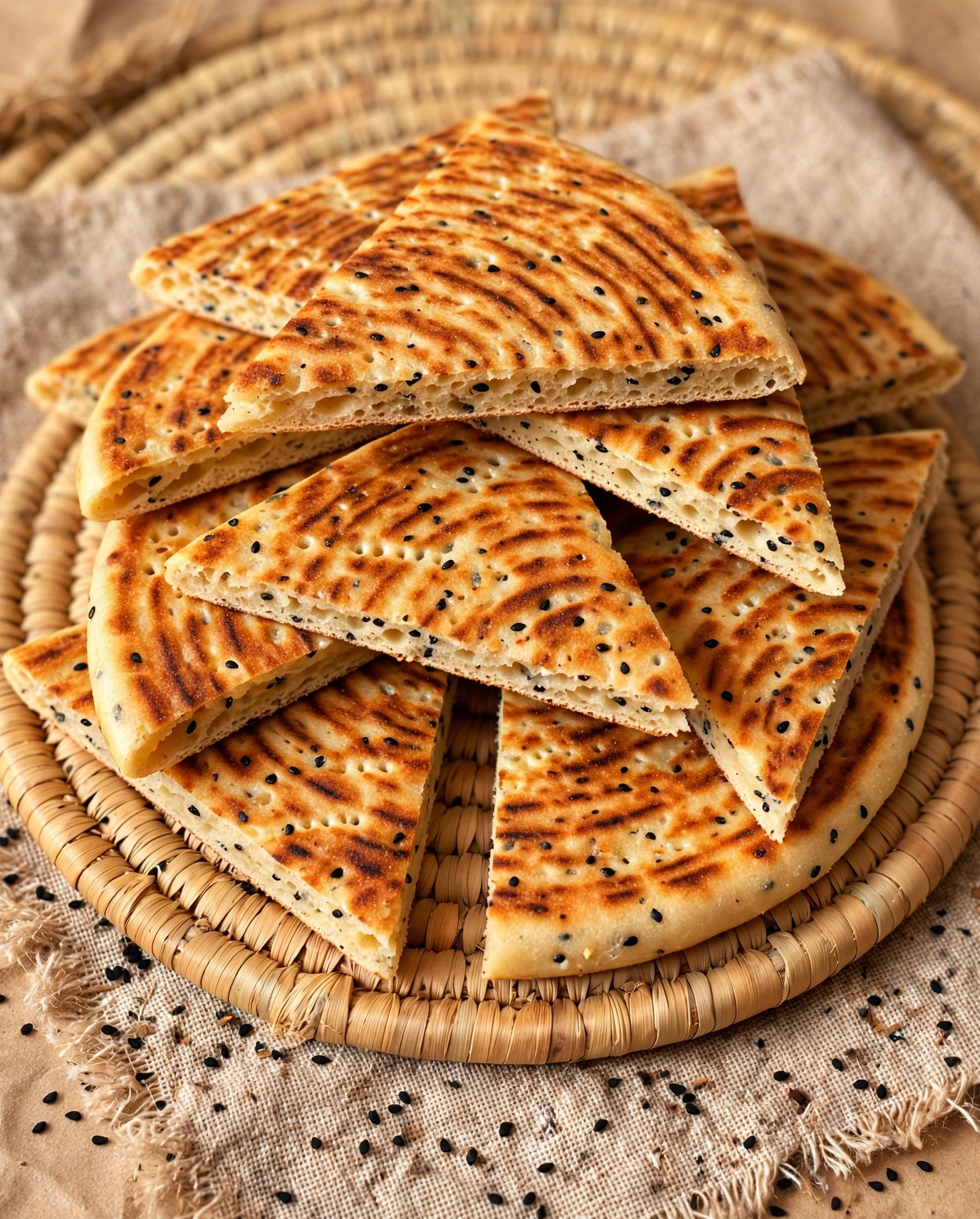
Kesra is a popular traditional Algerian bread, made mainly from semolina and cooked on a griddle or stone pan (tajine) rather than in an oven. It’s known for its dense texture and distinctive flavor, and is typically served with coffee or tea in the morning, or alongside traditional dishes like meat in tomato sauce and stews.
Calories in Algerian Kesra
Kesra is considered an energy-dense food due to its reliance on semolina and oil. Approximate values:
- One medium disc (about 100 g): roughly 260 to 300 calories.
- A small piece (about 50 g): roughly 130 to 150 calories.
These values are approximate and vary depending on the amount of oil or butter used in the dough and the cooking method.
Ingredients (makes about 4 medium discs)
- 500 g fine semolina (or a mix of fine and coarse semolina)
- 1 teaspoon salt
- 1 tablespoon vegetable oil (or traditional ghee/samn)
- Lukewarm water, as needed (about 300-350 ml)
- A little coarse semolina for dusting while shaping
Preparation Steps
- Prepare the dough: In a large bowl, mix the semolina with the salt, then add the oil and rub the mixture thoroughly with your hands until the semolina fully absorbs the oil.
- Kneading: Gradually add the lukewarm water while kneading continuously until you get a firm, smooth, non-sticky dough. Knead for 8 to 10 minutes until elastic.
- Resting: Cover the dough and let it rest for 20 to 30 minutes in a warm place, to make it easier to shape later.
- Dividing and shaping: Divide the dough into equal-sized balls, then flatten each ball on a surface dusted with coarse semolina into a round disc about 0.5 to 1 cm thick.
- Cooking: Heat the griddle or pan over medium heat without adding any oil. Place the disc on it and cook on both sides, gradually lowering the heat, until the kesra is fully cooked inside and takes on a light golden color outside (about 10-15 minutes per disc, depending on thickness).
- Serving: Serve the kesra warm. It can be kept wrapped in a clean cloth to preserve its softness.
Dietitian’s Notes
- Portion control: Given kesra’s density and high carbohydrate content, it’s recommended to eat a moderate portion (a small to medium disc) as part of a complete meal that includes protein and vegetables, to avoid a rapid rise in blood sugar.
- Choosing the semolina type: Using whole (unrefined) semolina whenever possible increases fiber content, which improves satiety and slows sugar absorption.
- Reducing fat: The amount of oil used in the dough can be reduced without significantly affecting the texture, lowering the overall calorie content.
- For people with diabetes or high blood pressure: It’s best to control the amount of added salt and watch portion size, keeping in mind that kesra has a relatively high glycemic index.
- Nutritional balance: For a balanced meal, it’s recommended to pair kesra with protein sources (eggs, cheese, meat) and fresh vegetables, rather than relying solely on fat or sugar sources (like large amounts of butter and honey).
Calories and Nutritional Values per Serving (approx. 100 g)
| Nutrient | Approximate Amount |
|---|---|
| Calories | 270-290 kcal |
| Carbohydrates | 50-55 g |
| Protein | 7-8 g |
| Fat | 4-6 g |
| Fiber | 2-3 g |
| Sodium | 300-400 mg |
Note: These values are approximate and may vary depending on the type of semolina used and the amount of oil and salt added in the recipe.
Leave a Reply