
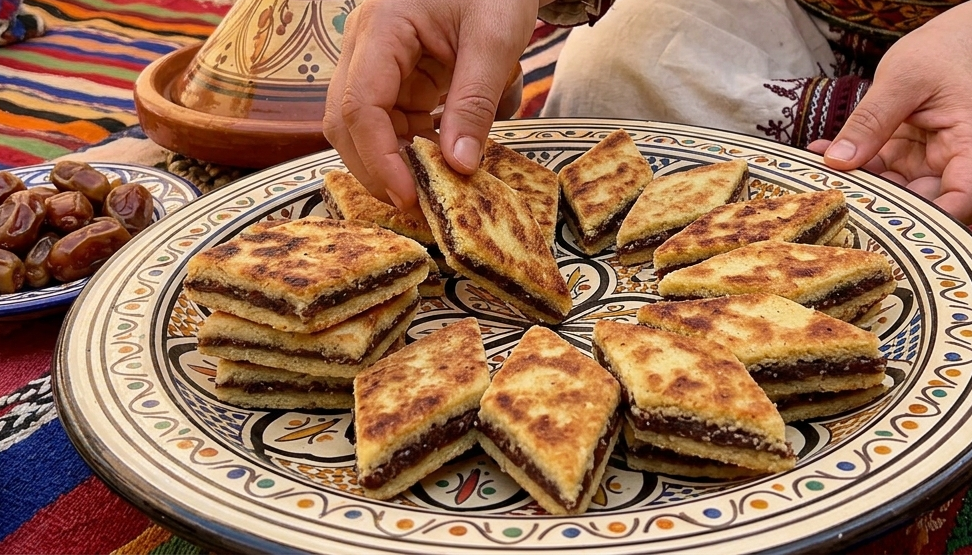
Braj (also known as Brik or Bourek) is one of the most famous Algerian dishes, prepared especially during the month of Ramadan. It consists of thin pastry (brik or diouina sheets) filled with ground meat, chicken, or tuna and egg, then fried in oil until golden and crispy on the outside and tender on the inside.
Calories in Algerian Braj
The calorie content of braj varies depending on the type of filling and the cooking method (fried or baked), but in general:
- Fried braj with ground meat filling: about 250 to 320 calories per piece.
- Braj filled with tuna and egg: about 220 to 280 calories per piece.
- Oven-baked braj: about 20 to 30% lower than fried, ranging between 150 and 220 calories per piece.
This significant difference is due to the amount of oil the dough absorbs during frying, which makes the baked option a healthier alternative for those watching their weight.
Ingredients for Algerian Braj
The recipe relies on precise measurements to ensure the dough and filling turn out well:
Dough ingredients:
- 3 kilos of medium semolina
- Half a kilo of flour
- 1 kilo of melted ghee (samn) or butter
- A little oil
- Salt
- 1 teaspoon of sugar
- Water and orange blossom water (to bind the dough)
Filling ingredients:
- Pitted and cleaned dates (ghars)
- A little butter
- Cinnamon
- Cloves
- Sesame seeds (jiljlan)
- Orange blossom water (for fragrance)
Steps to Prepare Algerian Braj
- Prepare the dough: Mix the semolina with the flour, salt, and sugar. Add the ghee and oil, and rub the mixture well with your fingers, then gradually bind it with water and orange blossom water until a soft dough forms.
- Prepare the filling: Knead the ghars (pitted dates) well with the butter, cinnamon, cloves, sesame seeds, and orange blossom water until it becomes soft and easy to spread.
- Shaping: Divide the dough into two portions. Roll out the first portion into a circle, spread the date filling over it, then cover with a second layer of dough.
- Cutting and cooking: Cut the dough into diamond shapes (maqrout style), and cook on a clay or hot iron griddle (“tajine”) until golden on both sides.
Nutritionist’s Notes
- Controlling the amount of oil: It is recommended to fry braj in clean oil that is sufficiently hot, since cold or insufficiently heated oil causes the dough to absorb more fat.
- Healthier alternative: Braj can be baked in the oven with a light drizzle of olive oil instead of deep-frying, which noticeably reduces calories and saturated fat.
- Nutritional balance: Since braj is relatively high in fat and calories, it is best enjoyed in moderation (one to two pieces) alongside a green salad or light soup to balance the meal, especially during Ramadan.
- For heart and cholesterol patients: People with high cholesterol or heart conditions are advised to limit their intake of fried braj, or to prepare it with lighter fillings such as vegetables or grilled chicken instead of fatty meat.
- For diabetics: Because the dough contains refined starches, braj should be eaten in limited amounts, with blood sugar monitored after the meal.
Calories and Nutritional Values per Serving (meat-filled braj, medium size ~120g)
| Nutrient | Approximate Amount |
|---|---|
| Calories | 280 – 300 kcal |
| Protein | 10 – 12 g |
| Fat | 18 – 22 g |
| Carbohydrates | 18 – 20 g |
| Fiber | 1 g |
| Sodium | 350 – 400 mg |
Note: These values are approximate and may vary depending on the type of filling, the amount of oil used, and the size of the piece.
Leave a Reply