
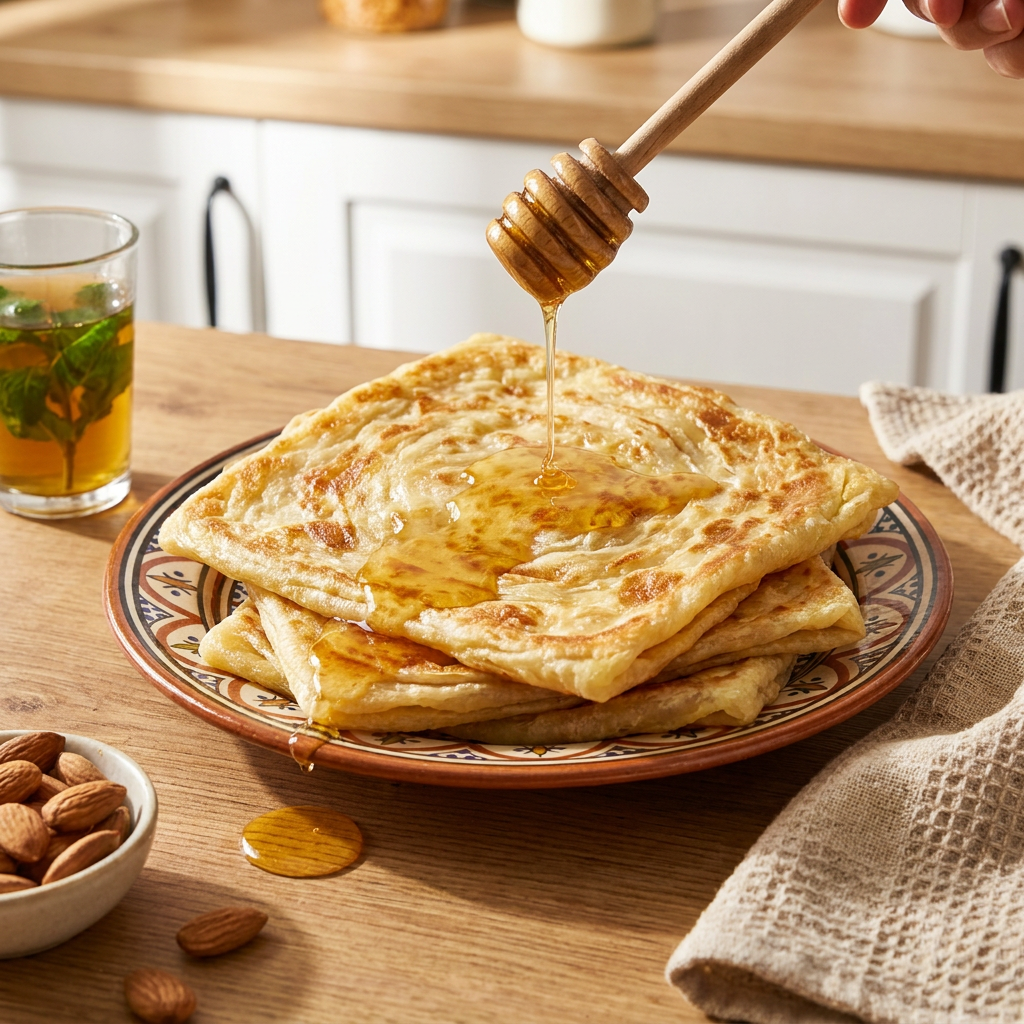
Msemen is one of the most popular types of traditional flatbread in Algerian and North African cuisine in general. It’s known for its many flaky layers and rich buttery flavor, and it’s usually served for breakfast or dinner alongside tea or coffee, sometimes with honey or jam. In this article, we walk you through the complete recipe step by step, along with information on nutritional value and calorie content, plus a few important notes from a nutritional standpoint.
Basic Ingredients
To prepare traditional msemen at home, you’ll need the following:
- 500 grams fine semolina (or durum wheat flour)
- 150 grams white flour (all-purpose flour)
- 1 teaspoon sugar
- 1/2 teaspoon salt
- Warm water for kneading (as much as needed for a cohesive dough)
For layering (the fat layer between the folds):
- Softened, melted butter
- Vegetable oil
- Fine semolina
- A pinch of baking/dessert yeast
This amount is enough to make 8 to 10 medium-sized pieces.
Preparation Steps
1. Kneading
Mix the dry ingredients (semolina, flour, sugar, salt) well in a large bowl, then gradually add the warm water while kneading continuously. Knead the dough by hand or with an electric mixer for up to 10 minutes, until it becomes smooth, elastic, and no longer sticky.
2. Dividing and Resting
Brush the dough with a little oil and divide it into small, equal-sized balls. Cover the balls with a cloth or plastic wrap and let them rest in a warm place for 15 to 20 minutes. This step is essential — it makes the dough easier to stretch later and keeps it soft.
3. Stretching and Layering
Grease your work surface with a little oil, then gently stretch each ball by hand until it becomes very thin and almost translucent, being careful not to tear it. Sprinkle the stretched dough with the butter, oil, and semolina mixture, then fold it into a square (envelope shape), creating multiple layers that give msemen its distinctive texture once cooked.
4. Cooking
Heat a heavy skillet (ideally a traditional msemen griddle/tajine or a thick, non-stick pan) over medium heat and grease it lightly with oil. Gently flatten the folded square with your fingers before placing it in the pan, then flip it on both sides until it turns golden brown and is fully cooked through. Serve msemen hot, right after cooking, for the best texture and flavor.
Calories and Nutritional Values per Serving
One medium-sized piece of Algerian msemen (about 100–120 grams) contains approximately the following, though values can vary depending on the amount of butter and oil used in the layering:
| Nutrient | Approximate Value per Piece |
|---|---|
| Calories | 250–300 kcal |
| Carbohydrates | 35–40 g |
| Fat | 10–14 g |
| Protein | 5–6 g |
| Fiber | 1–2 g |
These figures are approximate estimates, and they rise noticeably if more butter is used, or if msemen is served with honey or extra butter on top.
Notes from a Nutritionist
- Butter and oil are the biggest factor driving up calories: you can reduce the amount of butter used during layering, or replace part of it with olive oil, to cut down on saturated fat without significantly affecting the flavor.
- Semolina provides longer-lasting satiety compared to white flour alone, thanks to its relatively moderate glycemic index — though this doesn’t replace the need for moderation in portion size.
- It’s best served as part of a balanced meal that includes a protein source (such as eggs or cheese) and vegetables or fruit, rather than being eaten alone with sweetened tea, to achieve better nutritional balance.
- People watching their calorie intake, or managing blood sugar or heart conditions, are advised to stick to one small piece and avoid adding honey, jam, or extra butter when serving.
- A lighter version can be made by reducing the amount of white semolina and replacing part of it with whole wheat, which increases fiber content and makes the meal more filling.
With these simple steps, you can prepare an authentic Algerian msemen with golden, crispy layers on the outside and a soft interior — while keeping in mind a few simple adjustments if you’re mindful of tracking calories and nutritional value in your daily meals.
Leave a Reply