
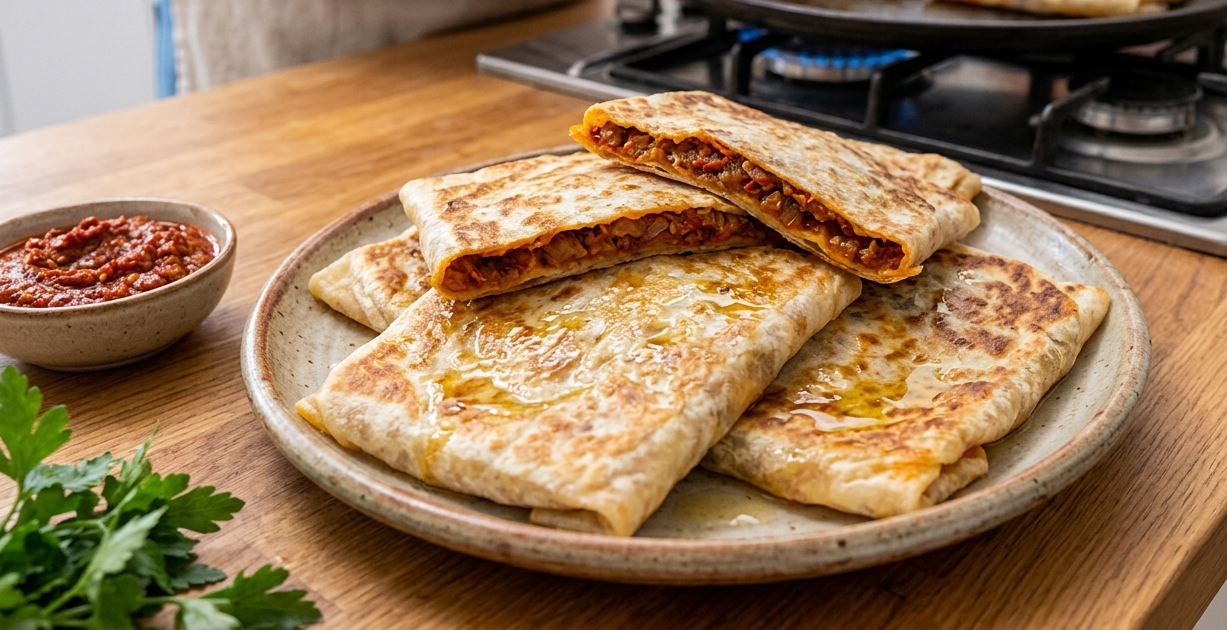
Mhajeb is one of the most popular Algerian street foods and home dishes: thin sheets of semolina dough filled with a savory onion-and-tomato mixture (shakshuka), then cooked on a hot griddle until golden and crisp outside, soft and tender inside. Mhajeb is typically served for breakfast or as a snack, and it’s a favorite at family gatherings and casual meals.
In this article, we walk through the complete recipe step by step, along with calorie and nutritional information and notes from a dietitian.
Calories in Algerian Mhajeb
Calorie content varies depending on the size of each piece and the amount of oil used during kneading and cooking, but roughly speaking:
- One medium-sized mhajeb (about 120-150 grams): 250-320 calories.
- The value increases if more oil is used for coating the dough or frying.
Ingredients for Algerian Mhajeb
For the dough
- 3 cups fine semolina (very fine grain)
- 1 cup all-purpose white flour
- 1 teaspoon salt
- Warm water for kneading (about 1 to 1.5 cups)
- Vegetable oil (for coating the dough and greasing surfaces)
For the filling (shakshuka)
- 4 large onions, finely chopped
- 3 large tomatoes, chopped or grated
- 1 tablespoon tomato paste
- Seasonings: salt, black pepper, hot or sweet red pepper (paprika)
- 2-3 tablespoons olive oil or vegetable oil
How to Prepare Algerian Mhajeb
First: Preparing the dough
- In a large bowl, mix the semolina with the flour and salt.
- Gradually add the warm water while kneading continuously until a firm, cohesive dough forms.
- Knead the dough by hand for 10 to 15 minutes until it becomes smooth, elastic, and no longer sticks to your hands (an electric mixer or stand mixer can be used to make this easier).
- Divide the dough into small, equal-sized balls. Coat them with oil to keep them from drying out, place them on a tray, cover with plastic wrap, and let rest for a full hour.
Second: Preparing the filling
- Heat the oil in a pan and add the chopped onions. Sauté over low heat until completely softened and wilted.
- Add the chopped tomatoes, tomato paste, and seasonings. Let the mixture cook over medium heat until the ingredients combine and all the liquid has evaporated from the pan.
- Let the filling cool completely before using — this step is important to make folding easier.
Third: Shaping and cooking
- Generously oil your work surface.
- Take a ball of dough and gently stretch it out with your fingers and the palm of your hand until it becomes thin and almost translucent, without tearing.
- Place a portion of the filling in the center of the stretched dough.
- Fold the four edges of the dough (right, left, top, bottom) toward the center to cover the filling, forming a square shape.
- Heat a flat griddle or a traditional “tajine” pan used for mhajeb, and lightly grease it with oil.
- Carefully lift the stuffed square, gently stretch it a bit more on the surface, then place it on the hot griddle.
- Flip the mhajeb on both sides until it turns golden brown and is fully cooked. Serve hot.
Dietitian’s Notes
- Controlling the oil: Since the recipe involves oiling the dough and surface multiple times, it’s best to use a moderate amount applied with a brush rather than pouring it directly, to reduce overall calories without affecting texture.
- Choosing the type of oil: Replacing part of the vegetable oil with olive oil improves the quality of fats consumed, especially when preparing the filling.
- Nutritional balance: Mhajeb is high in carbohydrates (from semolina and flour) but relatively low in protein and fiber. It’s best served alongside boiled eggs, yogurt, or a green salad to balance the meal.
- For people with diabetes or those watching their weight: It’s recommended to limit portions to one or two pieces per serving, avoid doubling the oil during cooking, and steer clear of deep-frying.
- Salt and seasoning: Those with high blood pressure can reduce the amount of salt added to the dough and filling, compensating for flavor with spices and seasonings instead.
Approximate Calories and Nutritional Values per Serving (one medium mhajeb, ~130g)
| Nutrient | Approximate Value |
|---|---|
| Calories | 280-300 kcal |
| Carbohydrates | 40-45 g |
| Protein | 6-7 g |
| Fat | 9-11 g |
| Fiber | 2-3 g |
| Sodium | 350-450 mg |
Note: These values are approximate and may vary depending on the amount of oil used, the size of each mhajeb, and the cooking method (relatively dry griddle vs. generous oil use).
With this, you’re ready to make authentic Algerian mhajeb at home, with its distinctive flavor and unique texture that’s both crispy and soft. Bon appétit! 🌾
Leave a Reply