
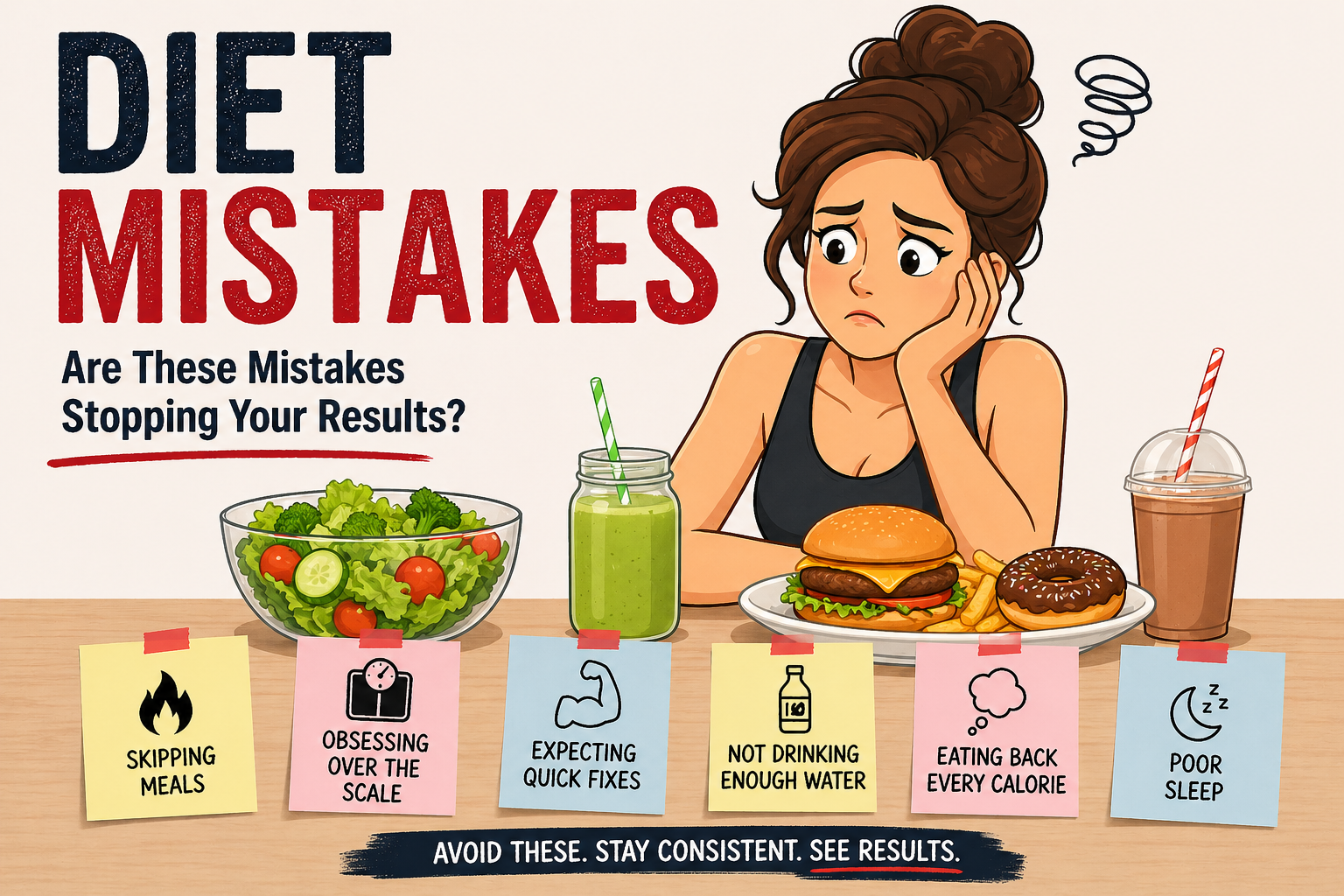
You’ve updated your fitness tracker, stocked your fridge with organic greens, and committed to a new routine. Yet, the scale isn’t budging. We now understand more than ever that weight loss isn’t just “calories in vs. calories out.” It is a complex dance of hormonal signaling, gut microbiome health, and metabolic efficiency.
If your progress has stalled, you likely aren’t lacking willpower; you might simply be falling for one of these ten common—yet scientifically significant—dietary traps.
1. “Protein-Maxxing” Without Fiber
There has been a massive surge in protein-forward diets recently. While protein is essential for muscle preservation and satiety, many people make the mistake of over-consuming animal proteins at the expense of fiber.
The Science of the Satiety Gap
Protein helps you feel full, but fiber is what regulates the speed of digestion and feeds your gut microbiome. Without enough fiber (aiming for 30–40g daily), you risk:
- Dysbiosis: An imbalance in gut bacteria that can lead to inflammation and weight gain.
- Insulin Spikes: High protein intake, especially from processed meats, can still trigger insulin responses if not balanced with complex carbohydrates.
- Physical Sluggishness: A common side effect of “keto-style” diets that slows down the elimination of waste and creates a “heavy” feeling that discourages movement.
The Fix: Adopt the “Fiber-First” rule. Every time you eat a protein source, pair it with a high-fiber companion like lentils, chia seeds, or cruciferous vegetables.
2. Ignoring “Adaptive Thermogenesis” (Metabolic Adaptation)
One of the most frustrating biological hurdles is metabolic adaptation. As you lose weight, your body becomes “efficient”—it learns to do more with less fuel.
Why Your Deficit Disappears
If you started your diet at 2,000 calories and lost 15 lbs, your “new” body requires fewer calories just to exist. If you don’t adjust your intake or increase your movement, your previous “deficit” becomes your new “maintenance” level.
- NEAT Erosion: Non-Exercise Activity Thermogenesis (NEAT) often drops during a diet. You fidget less, sit more, and move slower because your brain is trying to conserve energy.
The Fix: Every 4–8 weeks, perform a “Metabolic Audit.” Recalculate your TDEE (Total Daily Energy Expenditure) based on your current weight, not your starting weight.
3. The “Health Halo” of Ultra-Processed Health Foods
Modern grocery aisles are packed with “Keto-friendly,” “Gluten-free,” and “Plant-based” snacks. However, many of these are still Ultra-Processed Foods (UPFs).
The Problem with Engineered Palatability
These foods are designed to bypass your satiety signals. Even if a bar has 20g of protein, if it contains heavy emulsifiers and artificial sweeteners, it may:
- Disrupt your gut-brain signaling, making you feel “hungry” even when you’ve had enough calories.
- Trigger cravings for more sweet foods due to the intense flavor profiles.
- Lead to “passive overconsumption” where you eat more calories than you realize because the food is calorie-dense but volume-poor.
The Fix: Follow the 80/20 Whole Food Rule. 80% of your intake should come from single-ingredient foods (eggs, oats, spinach, fish).
4. Underestimating the “Liquid Calorie” Trap
With the rise of functional beverages—nootropic coffees, vitamin waters, and “gut-health” sodas—many dieters are drinking their progress away.
The Lack of Mastication (Chewing)
Research consistently shows that liquid calories do not trigger the same fullness signals in the brain as solid food. When you drink a 400-calorie smoothie, your brain doesn’t register it the same way it would a 400-calorie bowl of oatmeal and fruit. You end up hungry again much sooner because the liquid bypasses the mechanical process of digestion.
The Fix: Limit liquid calories to one meal replacement or post-workout shake per day. Opt for water, herbal tea, or black coffee as your primary hydration.
5. Chronic Stress and the Cortisol Connection
You can have a “perfect” diet on paper, but if you are chronically stressed, your biology is working against you.
How Cortisol Sabotages Fat Loss
High cortisol levels (the stress hormone) do two things that are disastrous for weight loss:
- Visceral Fat Storage: It encourages the body to store fat specifically in the abdominal area to protect vital organs.
- Gluconeogenesis: Stress can cause your body to break down muscle tissue to create glucose, spiking your blood sugar and insulin even if you haven’t eaten a carb all day.
The Fix: Incorporate daily “Stress-Budgeting.” Whether it’s five minutes of box breathing or a 20-minute walk without a phone, lowering your physiological stress is as important as counting your macros.
6. Falling for the “Weekend Warrior” Cycle
Many dieters are strict from Monday to Friday but “let loose” on Saturday and Sunday. This creates a psychological and physiological cycle that stalls progress.
The Math of the Weekend
If you maintain a 500-calorie deficit for 5 days ($500 \times 5 = 2,500$ calorie deficit), but eat a 1,500-calorie surplus over the weekend (a few drinks, a pizza, and brunch), your net weekly deficit drops to only 1,000 calories. This can turn a predicted 1 lb loss per week into a measly 0.2 lbs, which is often masked by water weight fluctuations from the high salt/carb intake of the weekend.
The Fix: Aim for “Consistency over Intensity.” It is better to have a moderate 300-calorie deficit every day than to starve for five days and binge for two.
7. The “Sleep Debt” Metabolic Tax
In our 24/7 digital culture, sleep is often the first thing sacrificed. However, sleep deprivation is a direct metabolic disruptor.
The Ghrelin and Leptin Swing
When you get less than 7 hours of sleep:
- Ghrelin (the hunger hormone) rises.
- Leptin (the fullness hormone) falls.
- Decision-making centers in the brain (prefrontal cortex) weaken, making you more likely to reach for high-fat, high-sugar foods the next day because your brain is looking for a quick hit of energy (dopamine).
The Fix: Treat sleep as a “non-negotiable” part of your diet plan. Better sleep equals better appetite control.
8. Over-Suppressing Appetite and Muscle Wasting
Whether through extreme fasting or modern appetite-suppressing medications, a new mistake has emerged: Under-eating to the point of muscle wasting.
The Danger of “Skinny Fat”
If you use extreme methods to suppress appetite, you might lose weight quickly—but a large portion of that weight could be muscle. Muscle is your primary metabolic engine. Losing it means your BMR (Basal Metabolic Rate) crashes, making weight regain almost inevitable once you stop the intervention.
The Fix: Even if you aren’t hungry, prioritize High-Quality Protein and Resistance Training to ensure the weight you lose is fat, not muscle.
9. Fear of Healthy Fats
Despite decades of research, many people still cling to the “Low-Fat” dogma, fearing that eating fat makes you fat.
Hormones and Fat
Healthy fats (omega-3s, monounsaturated fats) are essential for:
- Hormone Production: Including testosterone and estrogen, which regulate metabolism and mood.
- Nutrient Absorption: Vitamins A, D, E, and K are fat-soluble. Without fat, you can’t absorb them.
- Steady Energy: Fats provide a slow, sustained energy source that prevents the “crash and crave” cycle of a high-carb, low-fat diet.
The Fix: Include a thumb-sized portion of healthy fat with every meal (avocado, walnuts, olive oil).
10. The “All or Nothing” Psychological Trap
The biggest mistake isn’t what you eat; it’s how you think about what you eat.
The “I Already Ruined It” Effect
Commonly known as the Last Supper Effect, many dieters think that if they eat one “bad” food, the whole day is a waste. This leads to bingeing. In reality, one cookie doesn’t stop weight loss; the 3,000-calorie binge that follows the “guilt” of the cookie does.
The Fix: Practice Cognitive Reappraisal. Think of your diet as a “GPS.” If you take a wrong turn, the GPS doesn’t tell you to drive off a cliff; it simply says “recalculating” and finds the next best route to your destination.
Summary Table: Mistake vs. Solution
| Mistake | Why it Slows Progress | The Scientific Solution |
| Fiber Neglect | Poor gut health & hunger | Aim for 35g+ Fiber daily |
| Ignoring Adaptation | Calorie deficit disappears | Recalculate TDEE every 10 lbs |
| Ultra-Processed Snacks | Disrupts satiety hormones | 80% Whole Food Focus |
| Liquid Calories | Low brain-fullness signal | Limit to 1 shake per day |
| High Stress | Cortisol drives belly fat | Daily mindfulness/breathing |
| Weekend Binging | Erases weekly deficit | Maintain 90% consistency |
| Sleep Deprivation | Spikes hunger hormones | 7-9 hours of quality sleep |
| Muscle Wasting | Lowers your metabolism | Heavy protein + Strength training |
| Fat Phobia | Hormonal imbalance | Include healthy fats daily |
| Perfectionism | Leads to “quitting” cycles | Use the “Recalculating” mindset |
Conclusion: Weight Loss is About Harmony
Successful weight loss is about harmony, not restriction. By avoiding these ten mistakes, you stop fighting against your biology and start working with it. Focus on nourishing your gut, protecting your muscle, managing your stress, and—most importantly—being patient with the process.
Ready to break your plateau? Start by picking just one of these mistakes to correct this week. Consistency in small changes is what leads to permanent, sustainable results.
Leave a Reply