
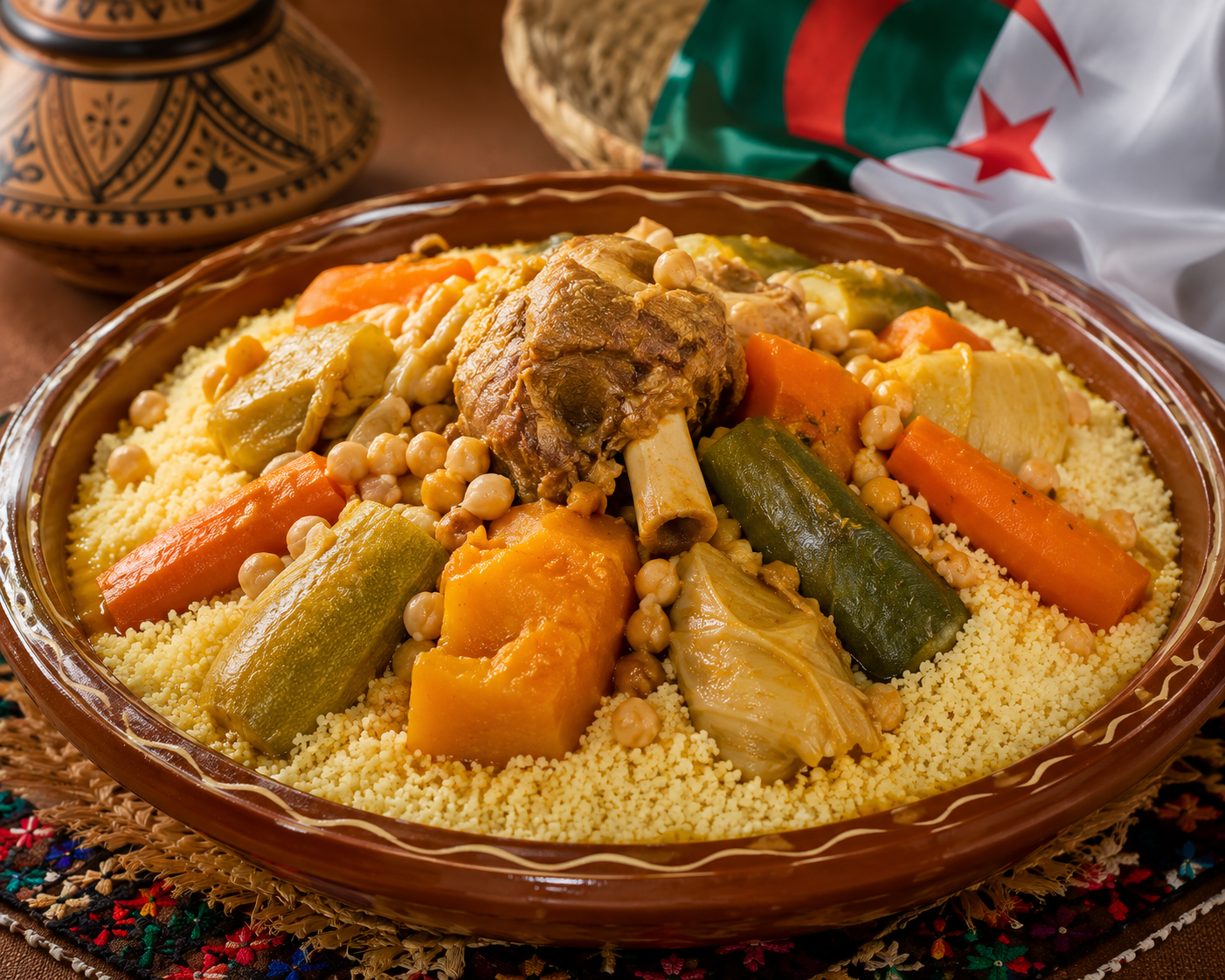
Algerian couscous is one of the most iconic traditional dishes in Algerian and North African cuisine as a whole. It is a staple dish served on special occasions, holidays, and especially on Fridays, having been passed down from generation to generation. This dish stands out for its rich combination of vegetables, meat, and legumes, making it a nutritionally complete meal, in addition to its distinctive flavor and preparation method, which requires patience and skill.
In this article, we’ll walk through the detailed ingredients and steps for preparing authentic Algerian couscous, along with accurate information on calories and nutritional values per serving, plus important notes from a dietitian for anyone who wants to enjoy it as part of a balanced diet.
Ingredients for Algerian Couscous (Serves 6)
Couscous Grains
- 700 g couscous grains (pre-steamed semolina)
- 3 tbsp olive oil
- 1 tsp salt
- Warm water, as needed
Meat and Broth
- 500 g lamb or beef (cut into medium pieces)
- 2 large onions, chopped
- 3 large tomatoes, grated, or tomato paste (2 tbsp)
- 3 garlic cloves, crushed
- 1 tsp turmeric
- 1 tsp black pepper
- 1 tsp ras el hanout (optional)
- 1 small cinnamon stick
- Salt, to taste
- 2 liters water
Vegetables
- 3 carrots, cut into large pieces
- 3 zucchini, cut into large pieces
- 2 turnips, cut into pieces
- 2 potatoes, halved
- 1 cup red pumpkin (squash), cubed
- 1 can cooked chickpeas (or ½ cup dried chickpeas, soaked overnight)
- A handful of black raisins (optional, for a distinctive sweet touch)
Steps to Prepare Algerian Couscous
- Prepare the meat and broth: In the bottom pot of the couscoussier (the cooking base), heat the olive oil and sauté the chopped onion until softened, then add the meat pieces and stir until they change color.
- Add the spices: Add the crushed garlic, turmeric, black pepper, ras el hanout, cinnamon stick, and tomato paste, and stir well so the flavors blend in.
- Add the water: Pour in the water and bring to a boil, then lower the heat and let it simmer for 30-40 minutes until the meat begins to cook through.
- Steam the couscous: Sprinkle the couscous grains with a little water, salt, and olive oil, and rub them with your hands to separate the grains. Place them in the top section of the couscoussier (the steamer basket) over the simmering broth and let them steam for 15-20 minutes.
- Fluff the couscous: Remove the couscous and rub it again with warm water and a little oil to separate the grains and prevent clumping, then return it to the steamer for another 15 minutes. This step can be repeated up to 3 times to achieve light, fluffy grains.
- Add the vegetables: Once the meat is partially cooked, add the carrots, turnips, and chickpeas to the broth and let them cook for 15 minutes. Then add the potatoes, pumpkin, zucchini, and raisins, and continue cooking until all the vegetables and the meat are fully tender.
- Serve: Spread the steamed couscous grains on a large serving platter, make a well in the center, and place the meat and vegetables in it. Ladle some of the broth directly over the couscous so it soaks it in well. Serve the remaining broth on the side in a separate bowl.
Dietitian’s Notes
- A naturally balanced dish: Algerian couscous combines complex carbohydrates (semolina), protein (meat and chickpeas), and fiber and vitamins (a variety of vegetables), making it a complete meal when prepared with moderate oil and salt.
- Managing fat content: It’s recommended to reduce the amount of olive oil used in the broth, using just enough to steam the couscous, to avoid unnecessarily high calorie counts.
- Choosing the meat: Lean cuts are preferable, and visible fat can be trimmed before cooking to reduce saturated fat content.
- For people with diabetes: Since couscous is high in carbohydrates, people with diabetes are advised to keep portions moderate and monitor their blood sugar, while adding extra vegetables and fiber to slow down sugar absorption.
- Raisins and salt: It’s best to use raisins in moderation to limit added sugars, and to control the amount of salt, especially for those with high blood pressure.
- Portion size: Despite how delicious the dish is, it’s recommended to avoid oversized portions and to favor a higher proportion of vegetables relative to couscous and meat.
Calories and Nutritional Values Per Serving
Based on an estimated 400 g serving (couscous + vegetables + a medium piece of meat + broth), the approximate nutritional values are:
| Nutrient | Approximate Amount |
|---|---|
| Calories | 450–550 kcal |
| Carbohydrates | 55–65 g |
| Protein | 20–28 g |
| Fat | 12–18 g |
| Fiber | 6–9 g |
| Sodium | 400–600 mg (depending on added salt) |
Note: These values are approximate and may vary depending on the type of meat used, the amount of oil, and the quantity of vegetables and legumes in each serving. For a precise calculation, it’s best to use a calorie-tracking app once the actual weight of the ingredients is determined.
Algerian couscous remains a symbol of the family table and of authentic Algerian hospitality — a dish that can be enjoyed as part of a healthy, balanced diet as long as fatty ingredients are kept in moderation and vegetables make up a generous share of the plate.
Leave a Reply