
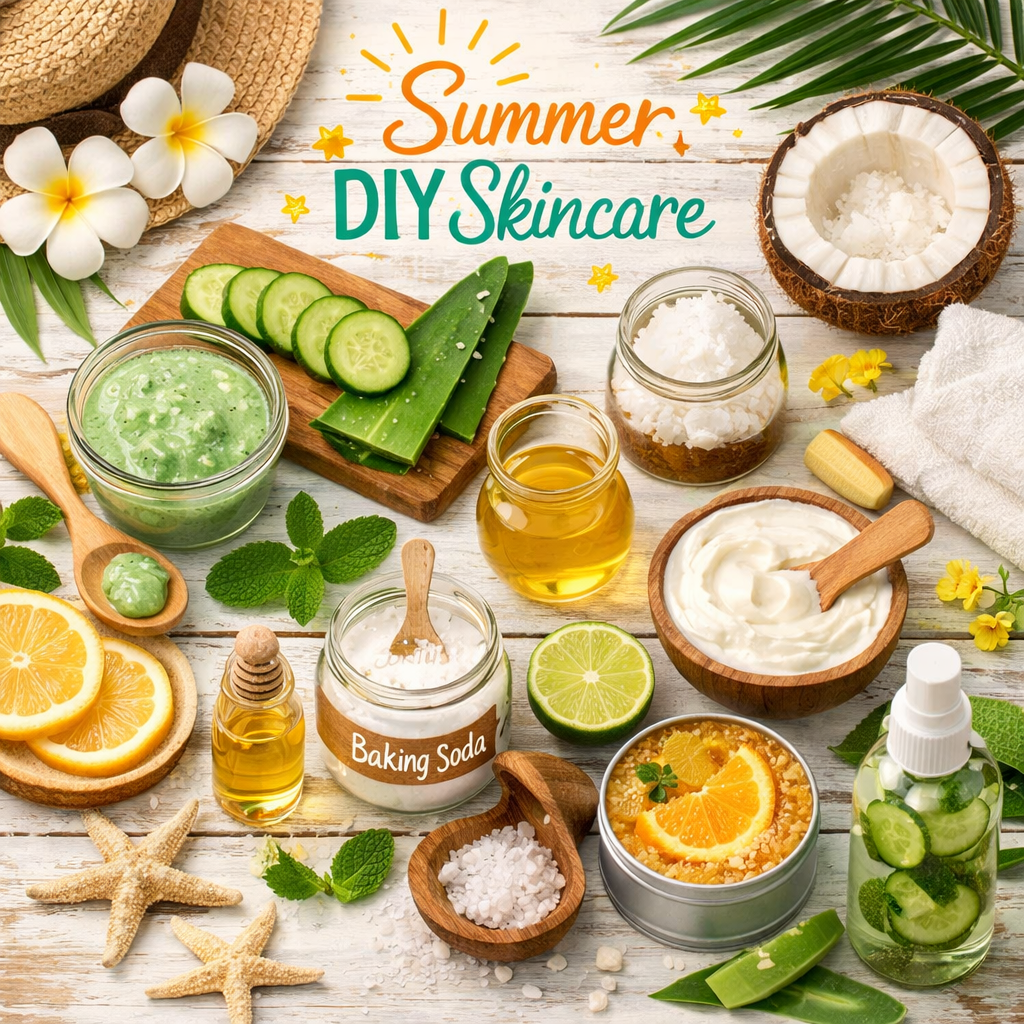
If you have oily skin, you already know the summer struggle is real. One moment you step outside looking fresh-faced; the next, you catch your reflection and see a greasy sheen that could double as a highlighter. Pores look larger, makeup slides off, and that dreaded mid-day “shiny nose” photo is inevitable.
But here’s the good news: You don’t need a cabinet full of expensive, chemical-laden products to fix it. In fact, many commercial “oil-control” products strip your skin so aggressively that your sebaceous glands panic and produce even more oil.
Welcome to the smart approach. This guide will walk you through a simple, DIY skincare routine for oily skin in summer using natural, kitchen-friendly ingredients. We’re talking mattifying, pore-clearing, hydrating (yes, oily skin needs water too!) and balancing recipes that cost pennies compared to store-bought alternatives.
By the end of this, you’ll understand why your skin behaves this way in summer, which ingredients to embrace (and which to banish), and a step-by-step routine that actually works.
Part 1: Why Your Oily Skin Goes Into Overdrive in Summer
Before we mix a single mask, let’s talk science. Your skin is your body’s thermostat. When summer temperatures rise, your sebaceous glands (tiny oil factories in your pores) get a double whammy of triggers.
The Heat Factor: For every degree your body temperature rises, sebum production can increase by nearly 10%. Your skin creates oil to keep itself flexible and protected. In dry winter air, it produces less. In humid, hot summer, it produces more to prevent moisture loss—even though humidity is high.
The Humidity Factor: High humidity traps sweat and oil on the surface. Instead of evaporating, it sits there, mixing with dead skin cells and bacteria. That’s why summer breakouts feel different—they’re stickier, more inflamed, and often appear along the hairline and jaw.
The Sun Paradox: You might think sun exposure dries out oil (and it temporarily does). But that’s a trap. Sun damage thickens the stratum corneum (outer skin layer), trapping oil underneath. Plus, UV rays oxidize sebum, turning it into a pore-clogging, inflammation-causing compound. Result? More blackheads and cystic acne later.
The DIY Advantage: Commercial mattifying wipes and toners often contain alcohol denat., which nukes your skin barrier. Within an hour, your oil glands go into emergency mode. DIY recipes, when done right, respect your skin’s acid mantle and teach it to calm down—not freak out.
Part 2: The Golden Rules of DIY Summer Skincare for Oily Skin
Before we list ingredients, memorize these 5 commandments. Break one, and your DIY routine will backfire.
Rule #1: Oil is not your enemy—stripping is.
Yes, you read that right. Oily skin still needs lipids. When you strip everything away, your skin overcompensates. Your goal is regulation, not eradication.
Rule #2: Hydration is non-negotiable.
Dehydrated oily skin is the ultimate paradox. Lack of water triggers more oil production. Summer humidity helps, but you still need water-based hydration (humectants like aloe, glycerin, honey).
Rule #3: Go light on physical exfoliation.
Ground walnut shells, sugar scrubs, and baking soda pastes create micro-tears. In summer, with more sweat and bacteria, those micro-tears get infected. Stick to gentle chemical exfoliation from natural sources (fruit enzymes, yogurt).
Rule #4: pH matters.
Healthy skin pH is around 4.5–5.5 (slightly acidic). Many DIY recipes (baking soda, strong lemon juice) spike pH to 8 or 9, destroying your acid mantle. We’ll use pH-balanced ingredients.
Rule #5: Don’t skip SPF—even with DIY.
No natural oil (coconut, raspberry, carrot seed) provides reliable broad-spectrum SPF 30+. You must use a commercial mineral sunscreen (zinc oxide or titanium dioxide) over your DIY routine. Think of DIY as treatment; SPF as medicine.
Part 3: Your Summer DIY Skincare Pantry (Essential Ingredients)
Here’s what to buy, forage, or steal from your kitchen. Each ingredient serves a specific purpose for oily summer skin.
The Superstars (Keep These Stocked)
| Ingredient | Why It Works for Oily Summer Skin |
|---|---|
| Aloe Vera Gel (fresh leaf or 99% pure) | Hydrates without oil, contains salicylic acid (natural BHA), soothes sun irritation, pH ~4.5 |
| Witch Hazel (alcohol-free) | Astringent but gentle; tightens pores temporarily; anti-inflammatory |
| Green Tea (brewed, cooled) | Antioxidants (EGCG) reduce sebum oxidation and calm redness |
| Full-Fat Greek Yogurt | Lactic acid gently exfoliates, zinc reduces oil, probiotics balance skin microbiome |
| Raw Honey | Humectant (draws moisture), antibacterial, healing; Manuka is best but local raw works |
| Oat Flour (finely ground oats) | Saponins gently cleanse; beta-glucans soothe irritation from heat |
| French Green Clay (or Bentonite) | Absorbs excess oil without stripping like clay masks; rich in magnesium |
| Apple Cider Vinegar (raw, with mother) | Restores pH, mild alpha-hydroxy acids; always dilute (1:4 with water) |
| Cucumber | Silica and ascorbic acid soothe, cool, and tighten in summer |
The “Use With Caution” List
- Lemon/Lime juice: Photosensitizing (causes burns in sun) and too acidic. Avoid.
- Baking soda: pH 9. Destroys acid mantle. Only for occasional spot treatment?
- Coconut oil: Comedogenic (clogs pores) for most oily types. Use only as a makeup remover, rinsed off thoroughly.
- Essential oils (tea tree, lavender): Potent but must be diluted (1 drop per tablespoon of carrier). Patch test first.
Part 4: The Simple 4-Step DIY Routine That Works
This is your morning and evening framework. Each step has a primary recipe plus variations. Do not skip steps; consistency > intensity.
Step 1: The Double-Cleanse Method (Morning & Night)
Summer oil + sunscreen + sweat = a single wash won’t cut it. Double cleansing is non-negotiable.
Morning (Light Cleanse):
- Recipe: 1 tbsp raw honey + 1 tsp cool green tea
- How to: Mix into a thin paste. Massage onto damp face for 30 seconds. Rinse with cool water.
- Why: Honey cleanses gently; green tea antioxidants prep skin for the day.
Evening (Deep Cleanse):
- Step A (Oil Cleanse): 1 tsp grapeseed oil (non-comedogenic) + 1 drop tea tree oil (optional). Massage onto dry skin for 1 minute to dissolve sunscreen and sebum. Emulsify with wet hands, then rinse.
- Step B (Water Cleanse): 1 tbsp oat flour + water to make a runny paste. Massage gently, rinse thoroughly.
- Why: Oil attracts oil; oat flour is the mildest physical exfoliant.
Pro Tip: If your skin feels squeaky or tight after cleansing, you’ve stripped it. Add more honey or reduce the oat flour.
Step 2: The Balancing Toner (Morning & Night)
Toners for oily skin should reset pH, not burn. Alcohol-free only.
Basic Recipe (Keeps 1 week in fridge):
- ¼ cup cooled green tea
- 2 tbsp alcohol-free witch hazel
- 1 tbsp raw apple cider vinegar
- 2 drops lavender essential oil (optional)
How to use: Shake well. Apply with a cotton pad or spray bottle. Let dry for 30 seconds before next step.
Summer Variation (Extra Cooling):
- Replace green tea with chilled cucumber juice (blend and strain a cucumber).
- Add 1 tbsp aloe vera gel.
- Keep in a small spray bottle; spritz throughout the day for mid-day oil control without stripping.
Why this works: The ACV lowers pH to ~4.5, which tells your sebaceous glands to slow production. Witch hazel tightens the appearance of pores temporarily. Green tea’s EGCG reduces the enzyme (5-alpha reductase) that converts testosterone into DHT—the hormone that triggers excess sebum.
Step 3: The Lightweight Hydrator (Morning)
Oily skin still needs moisture. Skip heavy creams; use gels.
DIY Aloe & Niacinamide Boost Gel (Make fresh daily):
- 2 tbsp fresh aloe vera gel (scooped from leaf)
- 1 capsule niacinamide (vitamin B3) powder (or crush a tablet)
- 2 drops vegetable glycerin
How to make: Mix thoroughly. Apply a pea-sized amount to damp skin after toner.
Why it’s genius: Niacinamide is clinically proven to reduce sebum excretion by up to 50% after 4 weeks of use. Aloe provides salicylic acid. Glycerin is a humectant that pulls water into skin without oil.
No-niagenamide alternative: Mix 2 tbsp aloe with 1 tsp plain, unsweetened aloe juice (not gel) and 2 drops of jojoba oil (yes, oil! It mimics skin’s own sebum and tells glands to relax).
Step 4: The Targeted Treatments & Masks (3x per week, evening)
Do not mask every night. 2–3 times weekly is plenty for oily summer skin.
The Pore Purge Mask (Wednesday & Sunday):
- 1 tsp French green clay
- 1 tsp raw honey
- 2–3 drops diluted tea tree oil (optional)
- Enough water or rose water to form a smooth paste
How to use: Apply to clean, dry skin. Leave for 8–10 minutes (not until cracked!). Rinse with lukewarm water.
Why green clay is better than bentonite for summer: It has a higher absorption rate for sebum but less “pull,” so it won’t cause broken capillaries or irritation.
The Lactic Acid Brightener (Friday night):
- 1 tbsp full-fat Greek yogurt
- 1 tsp mashed papaya (contains papain enzyme) or ½ tsp honey
How to use: Apply after cleansing. Leave for 10 minutes. Rinse. Follow with toner.
Why: Lactic acid (from yogurt) loosens the glue between dead skin cells. This prevents the summer “oil + dead skin = blackhead” equation. Papaya enzyme eats up excess keratin.
The Emergency Spot Treatment (as needed):
- 1 drop tea tree oil + 1 drop jojoba oil (dilution matters!)
- Or crush an aspirin tablet (acetylsalicylic acid, a BHA) and mix with a drop of aloe.
Apply directly to a forming pimple overnight. For large, inflamed summer cysts, use a cold green tea bag as a compress first.
Part 5: 3 Complete DIY Routines for Different Summer Scenarios
Not every day is the same. Here’s how to adapt.
Scenario A: “I woke up oily, it’s 95°F, and I’m going to the beach.”
- Cleanse: Raw honey + green tea (no oil cleanse needed in AM)
- Toner: Cucumber-witch hazel spray (keep mini bottle in beach bag)
- Hydrate: Aloe-only (skip glycerin to avoid stickiness in humidity)
- SPF: Mineral SPF 30+ (must be commercial)
- Mid-day refresh: Mist face with chilled rose water or green tea; blot with tissue (don’t rub)
Scenario B: “My skin is oily but also feels tight and irritated from sun exposure.”
- Cleanse: Oat flour + cold milk (lactic acid soothes)
- Toner: Aloe + green tea only (no ACV or witch hazel until healed)
- Treatment: Apply plain Greek yogurt as a 10-minute mask (cool from fridge)
- Moisturize: A few drops of pure aloe + one drop of evening primrose oil (anti-inflammatory)
Scenario C: “I have a big event tonight and need to minimize pores by 7 PM.”
- Morning routine: Normal honey cleanse + toner + aloe gel
- 3 PM: French green clay mask (5 minutes only—short and sweet)
- 4 PM: Light exfoliation with a damp washcloth (gentle circles)
- 5 PM: Cool rinse, then apply a thin layer of aloe + cornstarch (yes, cornstarch! Mix into a paste, apply, let dry 2 min, dust off). This is a natural mattifying primer.
- Makeup tip: Use a DIY setting powder: 2 parts arrowroot powder + 1 part cocoa powder (for deeper skin tones) or plain cornstarch.
Part 6: What to Avoid in Summer DIY Skincare (Tempting but Terrible Ideas)
Let’s bust some viral myths.
Myth #1: Lemon juice and sugar scrub for “glowing skin.”
Reality: Lemon juice causes phytophotodermatitis (blistering burns in sun). Sugar crystals create micro-cuts. Together? A summer disaster.
Myth #2: Pore strips made from milk and gelatin.
Reality: These rip out your natural moisture barrier along with blackheads. They also stretch pores, making them look larger long-term.
Myth #3: Slathering on pure shea butter or coconut oil as “natural moisturizer.”
Reality: Both are highly comedogenic (rated 4–5 out of 5). Unless you want closed comedones (those flesh-colored bumps), skip them on your face in summer.
Myth #4: Using rubbing alcohol as a toner.
Reality: Instant dryness → reactive oil flood within 2 hours. Plus, it kills beneficial skin bacteria that fight acne.
Myth #5: Not moisturizing because “it’s too hot.”
Reality: Dehydrated oily skin produces more oil. Always hydrate.
Part 7: Storing Your DIY Products Safely in Summer Heat
Natural products lack preservatives. Summer heat and humidity breed bacteria. Follow these rules:
- Fridge is your friend: Most DIY toners, masks, and aloe mixes last 5–7 days in a sealed jar in the fridge. Label with date.
- Make small batches: Mix only what you need for 3 days. It takes 2 minutes.
- Watch for signs of spoilage: Change in smell (sour, rancid), color, texture (slimy), or mold. When in doubt, throw it out.
- Use clean utensils: Never dip fingers into a jar. Use a clean spoon or spatula.
- Water + oil = bacteria party: If a recipe has both water and oil without an emulsifier (like lecithin), use within 24 hours.
Safe storage timeline cheat sheet:
- Honey-only cleanser: 2+ months (honey is naturally antimicrobial)
- Aloe gel (pure): 5–7 days in fridge
- Yogurt mask: Mix fresh right before use
- Green tea toner (with ACV): 7–10 days in fridge
- Oil cleanser blend (no water): 3–4 weeks in cool dark place
Part 8: Lifestyle Tweaks That Amplify Your DIY Routine
Skincare is 20% what you apply; 80% everything else. In summer, these matter more.
1. Change your pillowcase twice a week.
Oil, sweat, and bacteria build up fast. Use 100% cotton or silk (less friction).
2. Wash your sunglasses and phone screen daily.
They press against your nose, cheeks, and jaw—prime oily zones. Use a drop of alcohol-free witch hazel on a cloth.
3. Reconsider your hair products.
Heavy conditioners, leave-in creams, and dry shampoos migrate to your forehead and temples. In summer, switch to lightweight, water-based hair gels.
4. Hydrate from the inside.
Drink water with a pinch of sea salt and lemon (yes, lemon internally is fine—it’s not your skin). Electrolytes help regulate sweat and sebum composition.
5. Eat to balance oil.
Reduce: Dairy (whey spikes IGF-1, which increases sebum), high-glycemic carbs (white bread, sugar).
Increase: Zinc-rich foods (pumpkin seeds, chickpeas), omega-3s (walnuts, flaxseeds), and vitamin A (carrots, sweet potatoes).
6. Stop touching your face.
Summer sweat makes you want to wipe your brow. Use a clean tissue. Every time you touch, you transfer oil and dirt into open pores.
Part 9: Signs Your DIY Routine Is Working (And When to Pivot)
Give your skin 2–3 weeks to adjust. Here’s what to look for:
Good signs (keep going):
- Morning oiliness decreases by about 30–40% by week 2
- Pores look less “packed” with sebum
- Breakouts are smaller, heal faster, and occur less often
- Skin feels comfortable, not tight or greasy, 2 hours after cleansing
Bad signs (adjust something):
- New whiteheads or tiny bumps (means an ingredient is too rich—check coconut oil or shea)
- Stinging or redness after toner (dilute ACV further)
- Peeling or flaking (too much lactic acid from yogurt—reduce mask frequency)
- Itchy rash (possible allergy to essential oil or honey source)
When to see a dermatologist:
If you have cystic acne (large, painful bumps under the skin), severe oiliness that stains clothing, or signs of hormonal imbalance (hirsutism, irregular cycles), DIY is not enough. You may need prescription retinoids or spironolactone.
Part 10: The “No-Fuss” Travel Version of This Routine
Going on a summer trip? Here’s a minimalist kit that fits in a carry-on.
What to pack:
- Small jar of raw honey (cleanser + spot treatment)
- Powdered green clay in a spice shaker (just add water at destination)
- Mini spray bottle of 1:4 ACV + green tea toner
- Small tube of commercial mineral SPF (sorry, no DIY substitute)
- A few single-use aloe vera leaves (buy at destination if possible)
The routine in 3 steps (morning & night):
- Cleanse with honey + tap water.
- Spray toner. Let air dry.
- Clay mask every other night. Aloe gel as moisturizer.
- SPF every morning.
That’s it. Ten days of summer skincare in a quart-sized bag.
Final Thoughts: Simplicity Wins the Summer
You don’t need a 12-step Korean routine or a $50 “mattifying serum” that promises the moon. Oily skin in summer is not a curse—it’s a sign of strong, resilient skin that ages slower (true: oil protects against wrinkles). Your job isn’t to annihilate your sebum. It’s to work with your skin’s natural rhythms.
This DIY routine is simple, affordable, and science-backed. Honey cleans, clay absorbs, aloe hydrates, and green tea calms. Rotate the masks based on how your skin feels. Listen to your skin more than the calendar. And for heaven’s sake, wear that mineral sunscreen.
Now go enjoy summer—without that greasy shine stealing your confidence. Your balanced, matte-but-glowing skin is waiting.
Have you tried any of these DIY recipes? Or do you have a summer oily skin horror story? Drop a comment below—I’d love to help troubleshoot your routine.
Leave a Reply