
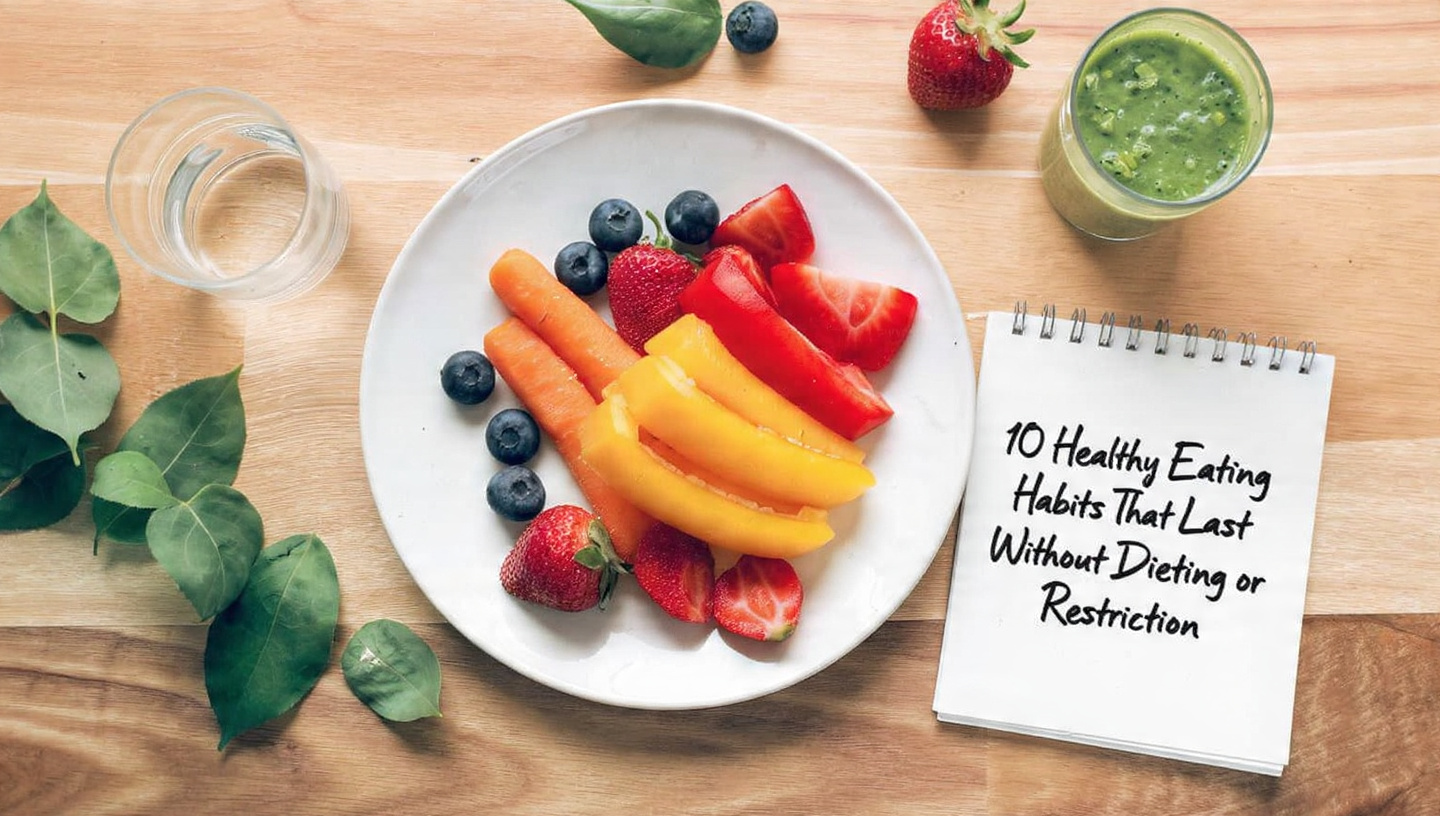
Healthy eating doesn’t need strict rules, food guilt, or constant self-control. The most sustainable approach to nutrition is building habits that feel natural and flexible—habits you can maintain for years, not just weeks. When you stop dieting and start focusing on everyday behaviors, healthy eating becomes easier and more enjoyable.
Below are 10 healthy eating habits that truly last—without restriction or dieting.
1. Eat Regular Meals to Support Energy and Focus
Skipping meals often leads to intense hunger and overeating later in the day. Eating regularly helps stabilize blood sugar levels, supports steady energy, and reduces cravings. Aim for consistent meals and snacks that fit your daily routine rather than forcing long gaps between eating.
2. Build Balanced Meals Instead of Counting Calories
You don’t need to track every calorie to eat well. A balanced meal that includes protein, fiber-rich carbohydrates, healthy fats, and vegetables will naturally support fullness and nutrition. When meals are balanced, your body is better able to regulate hunger and satisfaction on its own.
3. Practice Mindful Eating Daily
Mindful eating helps you reconnect with your body’s hunger and fullness signals. Eating slowly, without distractions, allows you to enjoy your food and notice when you’ve had enough. Over time, this habit reduces emotional eating and helps prevent overeating without any strict rules.
4. Focus on Adding, Not Removing, Foods
Restriction often leads to cravings and burnout. Instead of eliminating foods, focus on adding nourishing options like fruits, vegetables, whole grains, and protein. When your meals are more nutrient-dense, ultra-processed foods naturally take up less space without feeling forbidden.
5. Keep Healthy Foods Visible and Accessible
Your environment plays a big role in your eating habits. Keeping fruits, nuts, yogurt, or prepared vegetables easily accessible makes healthy choices effortless. When nutritious options are convenient, you’re more likely to choose them consistently.
6. Eat Enough to Feel Satisfied
Undereating can lead to low energy, irritability, and intense cravings. Eating enough food to feel physically and mentally satisfied helps prevent binge-restrict cycles. Satisfaction is a key part of sustainable healthy eating, not something to avoid.
7. Stay Hydrated Throughout the Day
Proper hydration supports digestion, energy levels, and appetite regulation. Sometimes thirst is mistaken for hunger, leading to unnecessary snacking. Drinking water regularly throughout the day supports overall health and complements healthy eating habits.
8. Respect Your Lifestyle and Culture
Healthy eating should fit your lifestyle, traditions, and preferences. Meals rooted in culture and family traditions can be nutritious and meaningful. When your eating habits align with your real life, they’re much more likely to last.
9. Allow All Foods Without Guilt
Labeling foods as “bad” creates guilt and unhealthy relationships with eating. Allowing all foods in moderation reduces obsession and emotional eating. When nothing is forbidden, balance becomes easier and more natural.
10. Focus on Progress, Not Perfection
Healthy eating is not about being perfect every day. One meal or one day doesn’t define your health. What matters most is what you do consistently over time. Progress, flexibility, and self-compassion are the foundation of lasting habits.
Final Thoughts
Healthy eating habits that last are built on consistency, balance, and trust in your body—not restriction or dieting. By focusing on simple, realistic habits and allowing flexibility, you can create a healthy relationship with food that supports your body and your life long term.
Leave a Reply